Skip to content

Step by step

The used car checklist, step by step

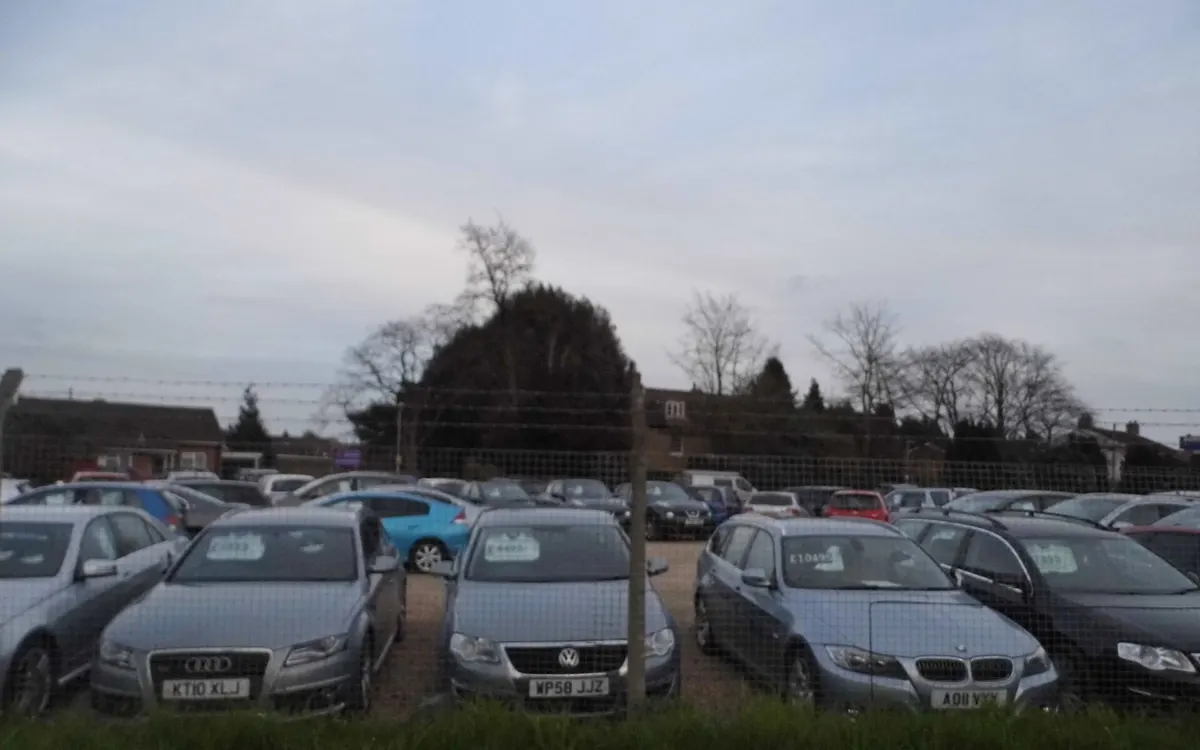
Used cars for sale on a car lot beside the A1
Photo: David Howard, CC BY-SA 2.0, Wikimedia Commons, cropped.
01

Start with the advert. Note the reg, mileage, price and anything the seller promises, such as a full service history. Take a screenshot. If there is a problem later, the advert shows what you were told.

Then call the seller. Before you travel, ask for:

  • the registration number
  • the make and model
  • the MOT test number
  • the current mileage

Also ask:

  • Is the V5C log book in your name, at your address? Can I see the car there?
  • Is there any finance left to pay on the car?
  • Has it had accident damage or been an insurance write-off?
  • How many owners has it had, and what service history comes with it?

Red flags: a price well below similar cars, a seller who keeps putting off a viewing, a request for a deposit before you have seen the car, or an offer to meet in a lay-by or petrol station.
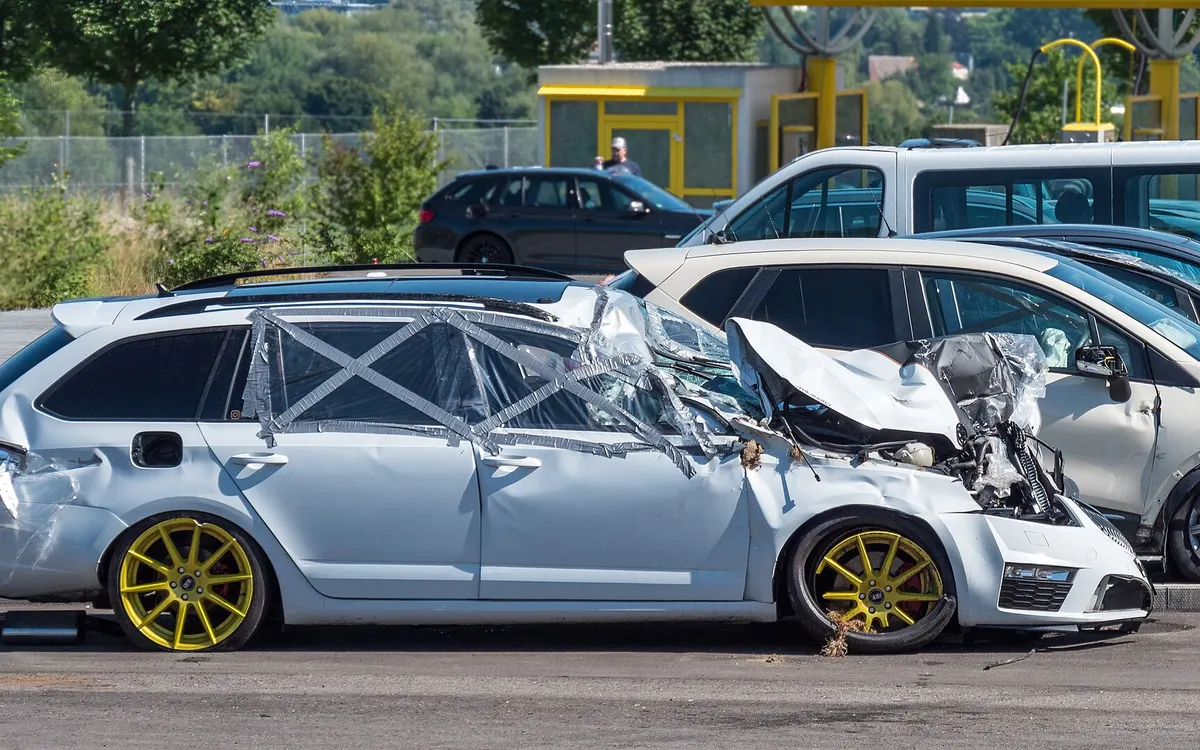
Skoda Octavia estate with front-end crash damage
Photo: JoachimKohler-HB, CC BY-SA 4.0, Wikimedia Commons, cropped.
02

Which checks can you run online before the viewing?

These free GOV.UK services only need the number plate:

  • DVLA vehicle enquiry. Tax and MOT status, first registration date, engine size, fuel type and the date the last V5C was issued. Check it all matches the advert. How to read the DVLA details.
  • MOT history. Every result for cars tested since 2005, the mileage at each test, what failed and the advisories (minor problems the tester noted). Look for mileage that goes down, long gaps and the same advisory year after year. Reading the MOT history.
  • Recall check. GOV.UK shows whether the car has been recalled for a safety problem.

If you drive in London, use TfL’s ULEZ checker. Cars that miss the standard pay £12.50 a day in every London borough. As a rough guide, petrol cars first registered after 2005 and diesels after September 2015 usually meet it, but TfL goes by the car’s declared emissions, so check the reg. Some English cities run Clean Air Zones too, and GOV.UK’s checker tells you if a car would pay.

What the free checks miss. They do not show outstanding finance, theft records or recorded accident damage. More on the gaps.

Outstanding finance. On hire purchase or PCP, the finance company owns the car until the loan is paid off. The DVLA holds no finance data, so you need a paid check to see it.

Insurance write-offs. Insurers put badly damaged cars into categories:

  • Cat A: scrap only. It should never go back on the road.
  • Cat B: broken up for parts. The car itself should never go back on the road.
  • Cat S: structural damage, such as a bent chassis. It can only return to the road once it has been repaired.
  • Cat N: no structural damage, often cosmetic or electrical. Brakes, steering or other safety parts may still be faulty.

A carVertical report searches records from more than 48 countries for mileage readings, damage, theft and past photos of the car, where they exist. It can flag an active finance record if its sources hold one. If finance is your main worry, ask any provider which UK finance database it checks.

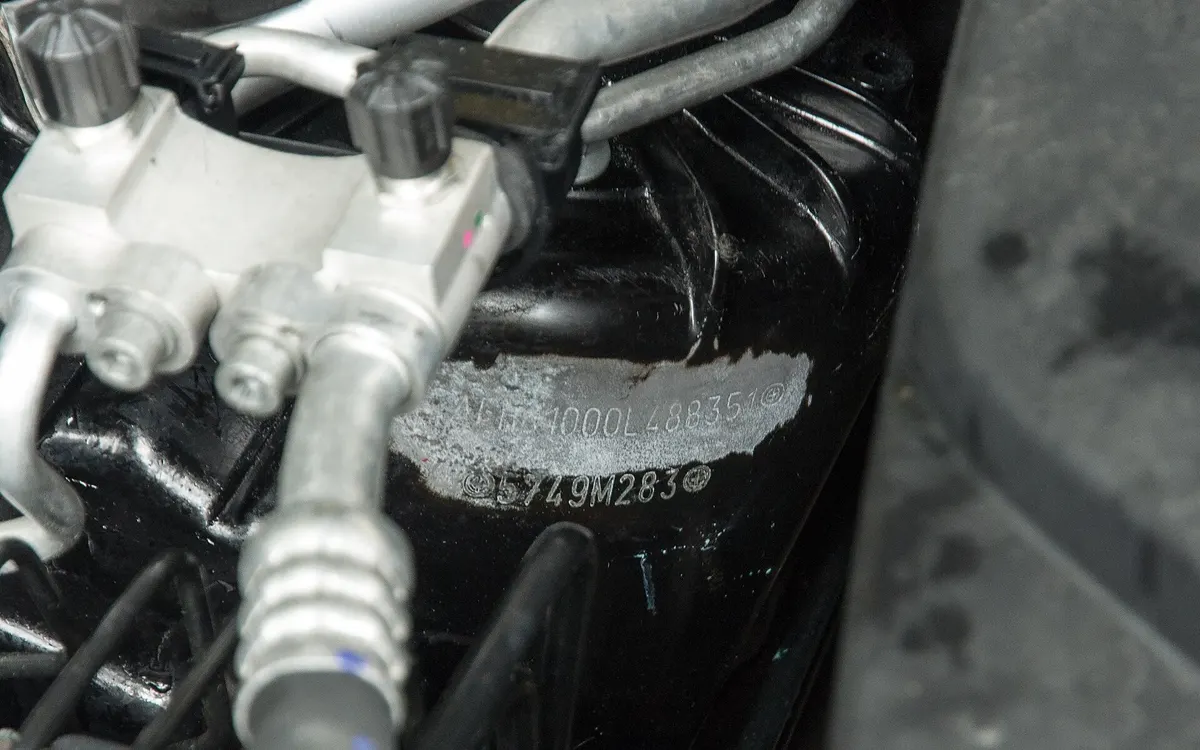
Tampered, re-stamped VIN in a car’s engine bay
Photo: Thilo Parg, CC BY-SA 3.0, Wikimedia Commons, cropped.
03

What should you check at the viewing and on the test drive?

See the car in daylight, ideally when it is dry, as rain hides scratches and dents. With a private seller, meet at their home, the address on the V5C. Then you know where to find them if something goes wrong.

The V5C log book. Ask for the original, not a photo or copy. Check that:

  • it has a “DVL” watermark
  • the serial number is not between BG8229501 and BG9999030, or BI2305501 and BI2800000 (if it is, the V5C might be stolen, so call the police when it is safe to)
  • the seller’s name and address match the registered keeper
  • the number of previous owners matches what you were told
  • the VIN and engine number on the car match the V5C

GOV.UK advises against buying a car without a V5C. Thieves can give a stolen car the identity of a similar legal one, called cloning, and a “lost” log book is a warning sign. If the seller can’t explain a mismatch, walk away. See where to find the VIN and how to check the V5C.

Test drive. You must have at least third-party insurance to drive. Check your own policy, or ask whether the seller’s covers you. Drive for at least 15 minutes on different types of road and watch for:

  • warning lights that stay on after the engine starts
  • brakes that vibrate
  • a clutch that slips or judders
  • steering that pulls to one side
  • noises from the suspension, or a knocking engine
  • heavy smoke from the exhaust
  • air conditioning that does not blow cold
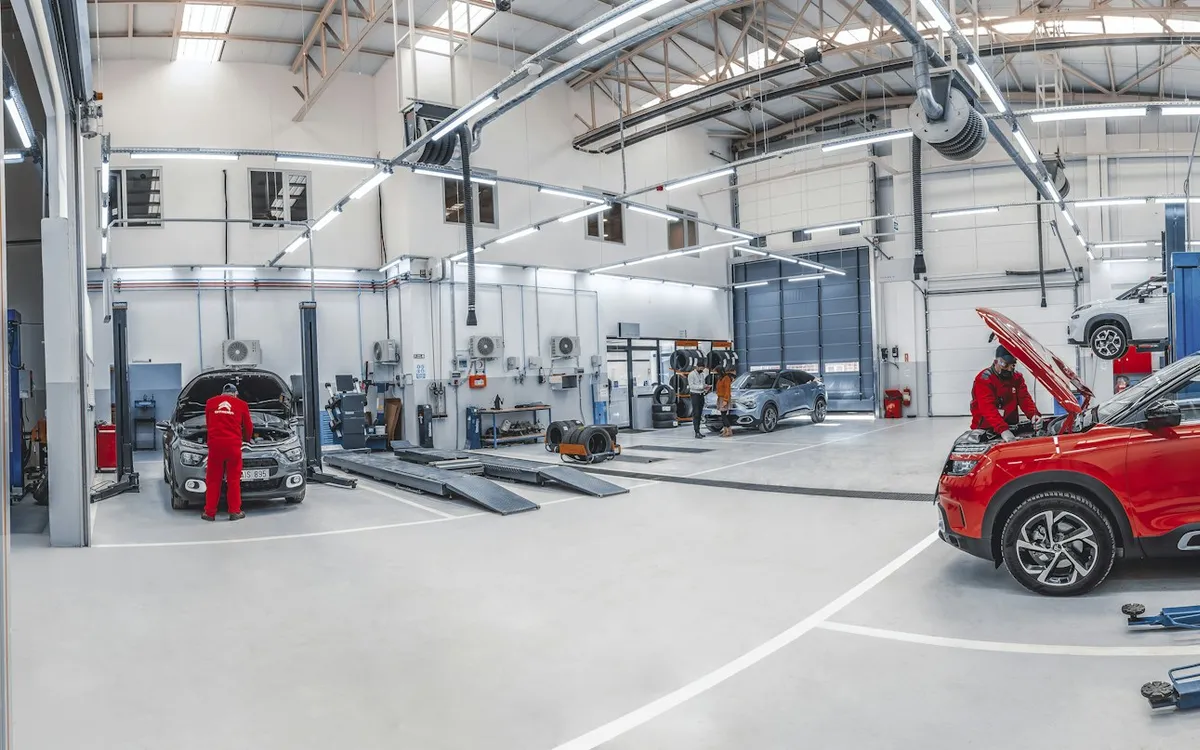
Modern garage with cars raised on lifts
Photo: Unsplash (Unsplash Licence), cropped.
04

Do you need an inspection, and what are your rights?

If you can’t judge the mechanics yourself, book an independent inspection before you agree to buy. Citizens Advice says a full report costs around £120 to £250. The Motor Ombudsman can suggest local providers.

Your rights depend on who sells the car.

From a dealer, the Consumer Rights Act 2015 applies. The car must be of satisfactory quality, fit for purpose and as described.

  • Within 30 days you can reject a faulty car for a full refund.
  • In the first six months, a fault is taken to have been there from the start unless the dealer proves otherwise.
  • After 30 days the dealer gets a chance to repair or replace the car first. If you later get a refund, they can take off an amount for your use.

From a private seller, the rule is “buyer beware”. The car must be as described and the seller must have the right to sell it. It does not have to be of satisfactory quality unless the seller told you it was.

With either seller, you usually can’t complain about a fault you were told about, or one you should have spotted when you inspected the car. Citizens Advice calls auctions the riskiest way to buy, as you may not get the protection a dealer sale gives you.

VIN stamped into a car floor under the seat
Photo: Hans Haase, CC BY-SA 3.0, Wikimedia Commons, cropped.
05

How do you pay safely and avoid deposit scams?

Don’t pay anything, deposit included, until you have seen the car and checked its papers. Scam adverts often show a cheap car, ask for a deposit or the full price up front, then the seller vanishes.

  • Credit card: section 75 protection covers a price over £100 and up to £30,000. Paying even part of it by credit card can cover the full price.
  • Debit card: you may be able to ask for a chargeback, which only returns what you paid on that card.
  • Bank transfer: Which? warns it gives you little protection. Your bank may also limit how much you can send in one go.
  • Cash: no fees, but no protection either, and carrying a large sum can feel unsafe.

When you pay, take the original V5C and the green new keeper slip. Keep the advert, your messages and a receipt with the price and date. Citizens Advice says you will need them if a finance company ever claims the car.

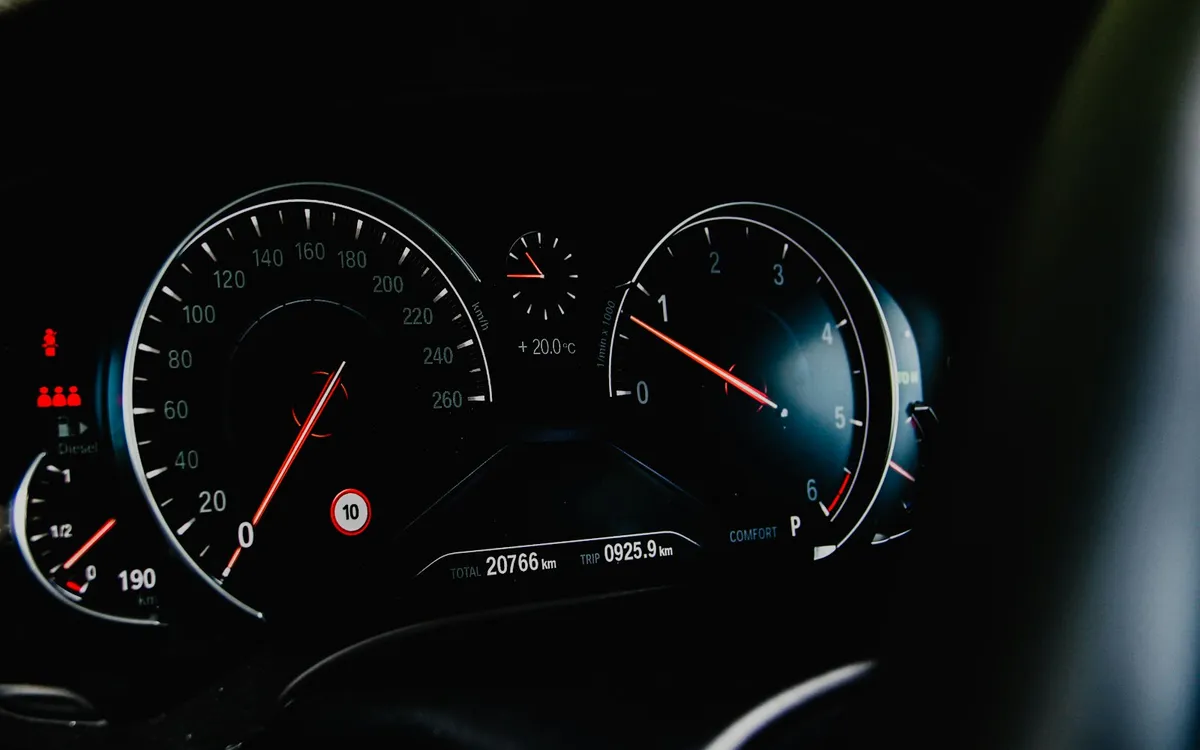
BMW instrument cluster showing the car’s mileage
Photo: Unsplash (Unsplash Licence), cropped.
06

What must you do before you drive the car home?

  1. Insure it. You need at least third-party insurance before you drive away.
  2. Tax it. The seller’s tax does not pass to you, and you must tax the car before you drive it. You can tax it online with the reference number on the green new keeper slip.
  3. Check the MOT date. The DVLA enquiry shows when the MOT runs out. Book the next test early if it is close.
  4. Look out for the new V5C. If it has not arrived 4 weeks after the change of keeper was registered, contact DVLA. Tell DVLA within 6 weeks, or a replacement costs £25.

Your checklist

Check a used car in four steps

  1. 01

    Question the advert first

    Get the reg, MOT test number and mileage before you travel.

  2. 02

    Run the history checks

    Use the free GOV.UK checks, then a paid report for finance, damage and theft.

  3. 03

    View, test and inspect

    See the car at the seller’s home in daylight and match the V5C to the car.

  4. 04

    Pay safely, then tax

    Avoid paying before the viewing, then insure and tax the car before you drive.

Report box: check the car by VIN or number plate

Before you pay a deposit

Find out whether:

  • Has the mileage been wound back?
  • Has it been in an accident?
  • Is it recorded as stolen?
  • Was it damaged and repaired?
  • What did it look like in old adverts?
  • Has it been on UK roads all its life?

With CheckByVIN£16.79 / report£20.99Extra −20%3-report package · £50.38 in total

Report carVertical

Quick answers

Frequently asked questions

Is a 10-year-old car with 120,000 miles a bad buy?

Not on its own. Which? says the average driver covers about 7,050 miles a year, so 120,000 is high, but motorway miles are easier on a car than short town trips. Check the MOT history for steady mileage and advisories that got fixed, and ask for a service history that backs it up.

Should I buy from a dealer or a private seller if I want the most protection?

A dealer gives you more rights: under the Consumer Rights Act 2015 you can reject a faulty car within 30 days for a full refund. From a private seller the car only has to be as described and theirs to sell, so your own checks and an independent inspection matter more.

Can I drive a used car home straight after buying it?

Yes, once it is insured and taxed. Tax does not transfer with the car, so tax it online with the reference on the green new keeper slip before you set off, and check the MOT has not run out.

What happens if the car I bought still has finance on it?

Citizens Advice says a private buyer who did not know about the finance and bought in good faith often has the right to keep the car, and it is up to the finance company to prove otherwise. If the car is taken and you had that right, complain to the finance company and then the Financial Ombudsman Service; if not, ask the seller for your money back.

Should I buy a Cat S or Cat N car?

It can be legal to drive: a Cat S car may return to the road once its structural damage is repaired, and a Cat N car had no structural damage. The RAC warns not to assume either is safe, so ask for proof of the repairs and have it inspected before you pay.

Sources
  1. Check a used vehicle you’re buying (GOV.UK, 2026)
  2. Vehicle registration: new and used vehicles (GOV.UK, 2026)
  3. Vehicle identification number (GOV.UK, 2026)
  4. Check the MOT history of a vehicle (GOV.UK, DVSA, 2026)
  5. Get vehicle information from DVLA (GOV.UK, 2026)
  6. Tell DVLA you’ve bought a vehicle (GOV.UK, 2026)
  7. Tax your vehicle (GOV.UK, 2026)
  8. Driving in a clean air zone (GOV.UK, 2026)
  9. Ultra Low Emission Zone (Transport for London, 2026)
  10. ULEZ standards for cars (Transport for London, 2026)
  11. Buying a used car (Citizens Advice, 2026)
  12. Problems with a used car (Citizens Advice, 2026)
  13. If the car you bought is still on hire purchase (Citizens Advice, 2026)
  14. Getting your money back if you paid by card or PayPal (Citizens Advice, 2026)
  15. Problems with motor vehicles (Isle of Anglesey Trading Standards, 2025)
  16. Seven questions you need to ask before buying a used car (Which?, 2024)
  17. Your rights if your car has a problem (Which?, 2026)
  18. Scam alert: vehicle-buying scams on the rise (Which?, 2023)
  19. What is an insurance write-off? (RAC, 2026)
  20. How to avoid buying a car with outstanding finance (RAC, 2026)
  21. How to avoid buying a cloned car (Motoring Research, 2026)
  22. Outstanding finance on a car (carVertical, 2026) (carvertical.com/gb/blog/outstanding-finance-on-car)
  23. Financial and legal status (carVertical help centre, 2026) (carvertical.com/gb/help/features/financial-and-legal-status)
  24. Vehicle history check (carVertical, 2026) (carvertical.com/gb)

Where do I find the VIN?

Car with arrows pointing to the VIN plate at the base of the windscreen and on the door pillar
  1. On the V5C log book: the line marked E, "VIN/Chassis/Frame no".
  2. Through the windscreen: a small plate at the bottom corner on most cars, readable from outside.
  3. On a door pillar: the manufacturer's label when you open the door.
  4. Stamped into the body: in the engine bay or under the carpet near a front seat, depending on the model.

A VIN is 17 letters and numbers and never uses I, O or Q. The number on the car must match the log book.

Don't have the VIN?

  1. Use the number plate: open the Reg plate tab of the form and search without the VIN.
  2. Ask the seller for the VIN or a photo of the V5C. Private sellers and dealers can share it before a viewing.
  3. Zoom into the advert photos: the windscreen plate is sometimes readable.
  4. At the viewing, compare the VIN on the car with the log book before you pay anything.

If a seller refuses to give the VIN or show the log book, walk away.

More on finding the VIN